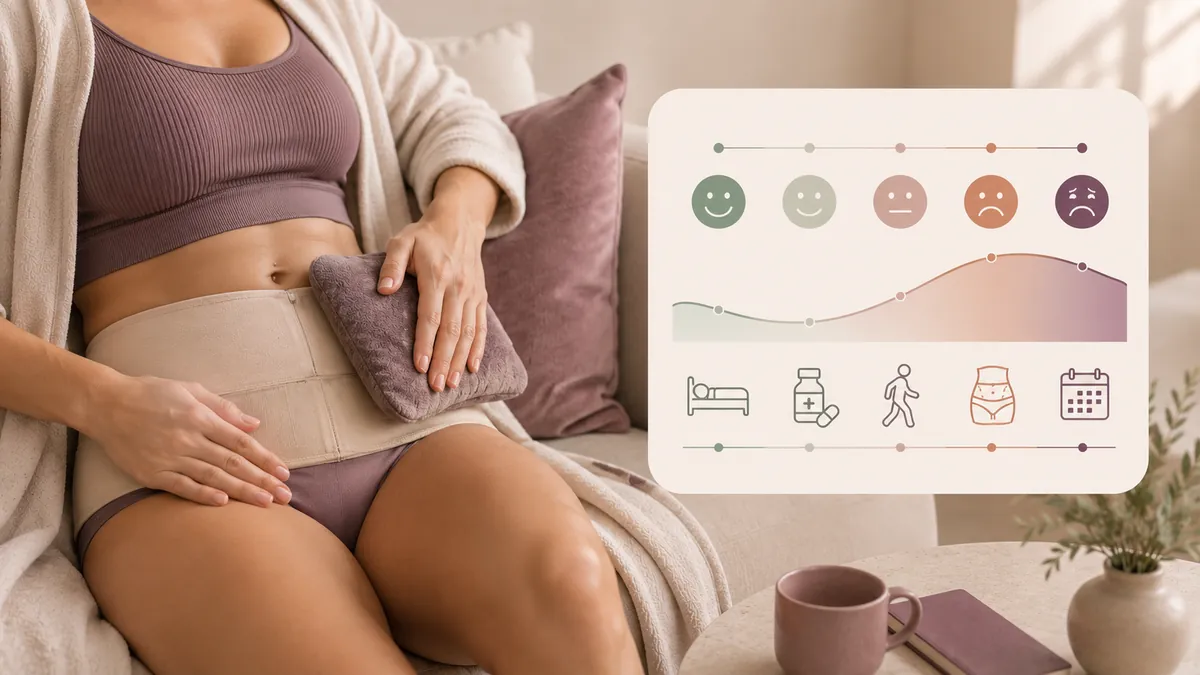
"How painful is it — really?" is the question that sits behind almost every other question a tummy tuck patient asks before surgery. And it deserves a genuinely honest answer — not the surgeon's office version ("you'll be a bit uncomfortable") and not the online horror-story version ("worst pain of my life"). The reality, backed by patient-reported data and clinical pain studies, is somewhere specific and predictable.
This guide walks through the pain timeline day by day, explains why muscle repair changes the experience substantially, covers modern pain management protocols that make a measurable difference, and — critically — explains where normal discomfort ends and warning signs begin. For the broader safety guide, start there; for surgical risks and complications, see the dedicated page.
The Honest Pain Timeline
Pain after abdominoplasty follows a predictable curve. Knowing the pattern in advance is one of the best things you can do for your own recovery — it turns a frightening unknown into a known quantity you can prepare for.
Days 1–3 — The Peak
The first 48–72 hours are the hardest. Most patients rate this period at 6–8 out of 10 on a visual analog pain scale. The dominant sensation is a deep, internal tightness — not the incision line itself but the muscle repair underneath pulling the abdominal wall into a position it is not used to. On top of that:
- Swelling peaks around 48–72 hours, adding pressure and a heavy feeling across the abdomen.
- Drain discomfort (if drains are used) adds an annoying tugging sensation at the exit sites — not sharp pain but a constant awareness.
- Standing straight is not possible — most patients walk bent at 20–30 degrees because the abdominal tension won't allow full extension yet.
- Coughing, laughing, or sneezing sends a sharp spike through the repaired muscles. Holding a pillow against the abdomen helps substantially.
- Getting in and out of bed is the worst single movement — the log-roll technique (turning to your side and pushing up with your arms rather than engaging your abs) makes a real difference.
This is the period where prescribed pain medication matters most. A proper multimodal protocol keeps the experience at a manageable 4–5/10 rather than an unmedicated 7–8. The key point: these are the worst days, and they pass.
Days 4–7 — Noticeable Improvement
By day 4–5, most patients notice a genuine turning point. Pain drops to 3–4 out of 10 — still present, still limiting, but qualitatively different. The deep muscle soreness begins to ease. You start to stand a little straighter. Walking gets easier. Sleep, which was difficult in days 1–3, improves significantly.
Many patients begin to reduce opioid medication during this window, relying more on scheduled NSAIDs and acetaminophen. Drains, if placed, are often removed between days 5–10 (removal itself is brief and usually described as "weird but not painful"). The removal often provides immediate comfort relief because the tugging sensation disappears.
Weeks 2–3 — Turning the Corner
By week 2, most patients have transitioned to over-the-counter medication only. The sensation shifts from "pain" to "discomfort" — tightness, stiffness, and occasional twinges rather than the deep soreness of the first week. Standing fully upright is usually possible by day 10–14, though it may still feel stiff.
This is the period where patients commonly describe feeling "functional but not normal." You can do light household tasks, work from home (desk work), and manage self-care independently. For a detailed look at what the 3-week mark typically looks like, see our 3 weeks after tummy tuck guide.
Weeks 4–6 — Activity Returns
By week 4, most patients rate their daily discomfort at 1–2/10 or zero. Pain medication is typically no longer needed. Walking at a normal pace is comfortable. Light exercise (walking, gentle lower-body work) is usually cleared by the surgeon around week 4–6.
Core-engaging exercise — sit-ups, planks, heavy lifting — is still off-limits until week 6–8 minimum (some surgeons say 12 weeks, especially with extensive muscle repair). Attempting it early produces a sharp, unmistakable "not ready" sensation from the plication sutures. For the full activity-return schedule, see the recovery timeline.
Months 2–6 — Residual Tightness and Numbness
Two sensations persist well past the acute recovery window:
- Tightness. The repaired abdominal wall continues to feel tighter than pre-surgery, especially when stretching or reaching overhead. This is not pain — it is the plication settling. Most patients stop noticing it by month 4–6.
- Numbness. The skin between the belly button and the incision line is numb or has reduced sensation after abdominoplasty because sensory nerves are cut during the procedure. Sensation gradually returns over 6–18 months, though some patients report a permanent patch of reduced sensation. This is expected, not a complication.
Occasional "zingers" — sudden brief shooting sensations — can happen as nerves regenerate. They are startling but harmless and a sign of nerve recovery.
| Period | Typical pain (0–10) | Dominant sensation | Medication |
|---|---|---|---|
| Days 1–3 | 6–8 | Deep muscle tightness, swelling pressure | Prescription multimodal |
| Days 4–7 | 3–4 | Soreness, stiffness, drain sites | Reducing opioids, NSAIDs + acetaminophen |
| Weeks 2–3 | 2–3 | Tightness, occasional twinges | OTC only (most patients) |
| Weeks 4–6 | 0–2 | Stiffness with activity | Usually none |
| Months 2–6 | 0–1 | Residual tightness, numbness | None |
What Makes Pain Worse (or Better)
Not every tummy tuck produces the same level of post-operative pain. Several variables shift the experience meaningfully:
Muscle repair vs no muscle repair
This is the single biggest variable. Muscle repair (rectus plication) adds an estimated 1–2 points on the pain scale in the first week compared to a tummy tuck without it. The sutures holding the rectus muscles together create sustained tension that the body needs days to accommodate. If your operation does not include plication (uncommon but possible for patients without diastasis recti), expect a noticeably easier first week.
Extended or fleur-de-lis vs mini
Larger operations produce more tissue disruption and more post-operative discomfort. An extended or fleur-de-lis abdominoplasty involves more incision length, more undermining, and sometimes more aggressive muscle work — all of which translate to more swelling and a longer peak-pain window. A mini tummy tuck, conversely, involves less tissue work and typically produces less intense and shorter-duration pain.
Drainless technique
Drainless (progressive tension) abdominoplasty eliminates drain-site discomfort entirely and may reduce seroma formation. Patients consistently report higher comfort with the drainless approach in the first 7–10 days, though the muscle repair component — which is the dominant pain source — remains the same regardless of drain strategy.
BMI and tissue volume
Higher BMI and greater tissue volume tend to produce more swelling and more tension on the closure, which can increase early discomfort. This is one of several reasons surgeons recommend optimising weight before surgery — it improves not just safety and results but the comfort of recovery. See the candidacy and health factors guide for BMI thresholds.
Smoking
Smoking impairs tissue oxygenation and wound healing, which can increase post-operative pain indirectly — poorly healing tissue is more inflamed, more swollen, and more uncomfortable. This is separate from the dramatically increased complication risk that smoking carries. Cessation for at least 4 weeks pre-op is a safety requirement, not a suggestion.
Modern Pain Management Protocols
Pain management for abdominoplasty has advanced significantly in the last decade. The shift is from opioid-heavy regimens (which come with their own problems — nausea, constipation, sedation, dependency risk) to multimodal analgesia: using several different classes of medication at lower doses, each targeting a different pain pathway. The result is better pain control with fewer side effects.
Multimodal analgesia — the standard approach
A typical modern post-abdominoplasty pain protocol includes:
- Scheduled NSAIDs (ibuprofen 400–600 mg every 6–8 hours, or ketorolac in hospital). NSAIDs reduce inflammation at the tissue level and are the foundation of the protocol.
- Scheduled acetaminophen (acetaminophen, 1000 mg every 6–8 hours, alternating with the NSAID). Effective through a different mechanism and safe to combine.
- Muscle relaxant (cyclobenzaprine or diazepam, typically for the first 3–5 days). This specifically targets the plication tightness and can make a substantial difference in comfort for patients who had muscle repair.
- Limited opioid (oxycodone or tramadol) for breakthrough pain only — not scheduled. Used when the non-opioid combination is not enough, typically days 1–5.
- Anti-nausea medication (ondansetron) as needed — nausea from anaesthesia and opioids is common and undertreated.
- Stool softener — opioids and reduced mobility cause constipation, which produces its own abdominal pain. Prevention is far better than treatment.
TAP blocks and local infiltration
Transversus abdominis plane (TAP) blocks are regional nerve blocks that numb the abdominal wall. Performed during surgery (under ultrasound guidance), they can significantly reduce pain in the first 12–24 hours. A systematic review and meta-analysis of TAP blocks in abdominoplasty found consistent reductions in early post-operative pain scores and opioid consumption.1
Some surgeons use direct local anaesthetic infiltration along the incision line and into the plication suture area instead of (or in addition to) formal TAP blocks. The principle is the same — bathe the pain-generating tissues in long-acting local anaesthetic to blunt the worst of the first 12–24 hours.
Pain pump options
Elastomeric pain pumps deliver a continuous trickle of dilute local anaesthetic through thin catheters placed along the incision during surgery. They typically run for 48–72 hours. Evidence for their effectiveness in abdominoplasty is mixed — some studies show benefit, others show minimal difference over a good multimodal protocol. They add cost but are an option worth discussing with your surgeon if you are concerned about pain management.
ERAS protocols (Enhanced Recovery After Surgery)
ERAS is a comprehensive approach to perioperative care that has been adopted from major abdominal surgery into plastic surgery. It includes preoperative optimisation (nutrition, hydration, anxiety management), intraoperative strategies (minimising opioids, using regional blocks), and structured postoperative care (early mobilisation, multimodal analgesia, early nutrition). A review of ERAS adoption in plastic surgery found reduced opioid consumption, shorter recovery, and improved patient satisfaction when these protocols are used.3 Ask your surgeon whether they follow an ERAS-style protocol — it signals a modern, evidence-based practice.
Muscle Repair Pain — Why It's Different
Rectus diastasis repair (plication) is the part of a tummy tuck that generates the most post-operative discomfort, and it deserves its own discussion because it is qualitatively different from incisional pain.
The plication tightness
During plication, the surgeon sutures the separated rectus abdominis muscles back together along the midline. This immediately narrows the waistline and flattens the abdominal profile — but it also means your abdominal wall is suddenly held in a position it has not been in for years (or ever, in some cases). The sutures are permanent or very long-lasting, and the tissue around them needs time to adapt.
The result is a sustained deep tightness — patients consistently compare it to wearing a corset that cannot be removed. It is not a sharp or stabbing pain; it is a constant, inescapable pressure. It is worst when trying to stand upright, when coughing, when transitioning between sitting and standing, and when turning in bed.
The "corset" sensation
The corset analogy is useful because it conveys both the quality and the trajectory. When you first put on a tight corset, it feels restrictive and uncomfortable. After wearing it for a while, your body adapts and it becomes background sensation. Plication follows the same curve — the first 3–5 days are genuinely restrictive, but by day 7–10 the body begins to accommodate the new position, and by week 3–4 the tightness is barely noticeable.
Standing-straight timeline
Standing fully upright after plication typically follows this progression:
- Days 1–5: Walking bent at 20–30 degrees; attempting full extension pulls on the repair and produces sharp discomfort.
- Days 5–10: Gradual straightening; most patients are at 10–15 degrees of forward lean.
- Days 10–14: Most patients can stand fully upright, though it may feel stiff.
- Week 3+: Upright posture feels natural again.
With vs without muscle repair — comparison
| Factor | With muscle repair | Without muscle repair |
|---|---|---|
| Peak pain (days 1–3) | 6–8/10 | 4–6/10 |
| Dominant sensation | Deep abdominal tightness | Incisional soreness, swelling |
| Standing upright | 10–14 days | 3–5 days |
| Prescription meds duration | 5–7 days | 3–5 days |
| Muscle relaxant helpful? | Yes — substantial benefit | Usually not needed |
| "Corset" tightness | Present for 2–4 weeks | Absent |
| Return to core exercise | 8–12 weeks | 4–6 weeks |
Pain vs Discomfort vs Complications — Knowing the Difference
One of the most important things to understand about post-operative pain is where normal ends and abnormal begins. Not every unpleasant sensation is a complication — but some are, and knowing the difference can save you from both unnecessary panic and dangerous delay.
Normal post-op sensations
The following are all normal and expected after abdominoplasty:
- Deep muscle soreness (especially with plication)
- Swelling and puffiness that peaks at 48–72 hours
- Numbness between the belly button and incision
- Itching as healing progresses (weeks 2–6)
- Occasional shooting "zingers" as nerves regenerate
- Tightness with full extension or stretching
- Mild bruising, especially at drain sites
- A pulling or tugging sensation when standing up
Warning signs that need attention
The following are not normal and require immediate contact with your surgeon. For a comprehensive list, see the recovery warning signs guide.
- Sudden increase in pain after several days of steady improvement — this can signal a hematoma, seroma, or infection.
- Pain much worse on one side than the other — asymmetric pain suggests a localized problem (hematoma, seroma, or wound issue).
- Fever above 38.5°C (101.3°F) — low-grade fever in the first 24–48 hours can be normal; persistent or high fever is not.
- Expanding redness, warmth, or hardness around the incision — may indicate infection or fluid collection.
- Foul-smelling or purulent drainage — normal drain fluid is serous (pink/clear); odour or pus is abnormal.
- Hard, suddenly-appearing swelling — may be a hematoma requiring drainage.
- Chest pain, shortness of breath, or calf swelling — may indicate a blood clot (DVT/PE) and is a medical emergency.
When to call your surgeon
The rule is simple: if you are unsure whether what you are experiencing is normal, call. A good surgical team would rather take a 2-minute reassurance call than discover a treatable complication that was ignored for 48 hours. Specifically, call immediately for any warning sign listed above. Call during office hours for questions about medication adjustment, drain management, activity concerns, or anything that is bothering you but is not urgent. Never ignore a change that "feels wrong" — your instinct is relevant data. For a full overview of surgical complications, see risks and complications.
What Patients Actually Say — Evidence-Based Satisfaction Data
The question behind the pain question is usually: "Is it worth it?" The answer, from validated patient-reported outcome data, is overwhelmingly yes — but with important nuance.
"Would you do it again?" statistics
Large validated studies using patient-reported outcome measures (PROMs) consistently show:
- Overall satisfaction: 90–97% of abdominoplasty patients report satisfaction with their outcome at 6–12 months.2
- "Would do it again": the large majority say yes, even after full disclosure of what the recovery involved.
- Quality of life improvement: validated instruments show significant improvements in body image, physical functioning, psychosocial wellbeing, and sexual wellbeing scores after abdominoplasty.4
Pain vs outcome satisfaction
The disconnect between "the pain was significant" and "I would absolutely do it again" is one of the most consistent findings in abdominoplasty research. Patients do not forget the pain — they simply contextualise it against the result. In validated outcome analyses, pain consistently ranks as the worst part of the experience, but it is equally consistently rated as temporary, manageable, and ultimately worth it.2
This tracks with what pain science tells us more broadly: anticipated pain (before surgery) is almost always rated as more frightening than remembered pain (after surgery), because the brain tends to compress and contextualise temporary unpleasant experiences once they are over. The patients who struggle most with post-operative pain are typically those who had inadequate expectation-setting before surgery — which is why guides like this one exist.5
FAQ
-
How painful is a tummy tuck on a scale of 1 to 10?
Most patients rate the first 48 hours at 6–8 out of 10, dropping to 3–4 out of 10 by days 5–7. The peak is a deep, tight soreness centred on the muscle repair, not a sharp or burning pain. By weeks 2–3 most patients describe the sensation as discomfort rather than pain. Modern multimodal pain protocols — combining NSAIDs, acetaminophen, muscle relaxants, and limited opioids — keep the experience manageable for the large majority of patients.
-
Is tummy tuck pain worse with muscle repair?
Yes. Muscle repair (rectus plication) adds meaningful discomfort because the internal sutures hold the abdominal wall in a tighter position than your body is accustomed to. Patients describe a corset-like tightness and difficulty standing fully upright for the first 7–14 days. A tummy tuck without muscle repair is noticeably less uncomfortable in the early days. The muscle-repair component is the primary driver of the "bent-over walking" posture in the first week.
-
How long does tummy tuck pain last?
Acute pain (the kind that requires prescription medication) typically lasts 5–7 days. Moderate discomfort continues through weeks 2–3, and most patients transition to over-the-counter pain relief by then. Residual tightness, occasional twinges, and numbness around the incision can persist for 3–6 months. The numbness is not painful but can feel unusual. By 6 months, most patients report no meaningful daily discomfort.
-
What helps with tummy tuck pain after surgery?
Modern pain management uses multimodal analgesia: scheduled NSAIDs (ibuprofen or ketorolac) plus acetaminophen around the clock, a muscle relaxant for the plication tightness, and limited opioids only for breakthrough pain. Many surgeons also use TAP blocks (transversus abdominis plane blocks) or local anaesthetic infiltration during surgery, which can reduce pain significantly in the first 12–24 hours.1 Walking early (within 24 hours), sleeping in a reclined position, wearing a compression garment, and avoiding straining all help. Ice packs on the upper abdomen can also reduce swelling and discomfort.
-
When should I worry about pain after a tummy tuck?
Normal post-op pain is symmetrical, gradually improving, and responsive to medication. Warning signs include: sudden increase in pain after several days of improvement, pain that is much worse on one side than the other, pain accompanied by fever above 38.5°C (101.3°F), expanding redness or warmth around the incision, a hard swollen area that appeared suddenly, foul-smelling drainage, or chest pain and shortness of breath (which may indicate a blood clot). Any of these warrant an immediate call to your surgeon — not a wait-and-see approach.
-
Do most tummy tuck patients say it was worth the pain?
Yes. Large validated patient-reported outcome studies consistently show satisfaction rates of 90–97% after abdominoplasty, with the majority of patients saying they would do it again.2 Pain is consistently rated as the worst part of the experience, but it is also consistently rated as temporary and manageable in hindsight. The disconnect between "the pain was real" and "I would absolutely do it again" is one of the most consistent findings in abdominoplasty satisfaction research.